Certifications Of Analysis
Customers need to additionally beware when paperwork appears repeated across different items or batches without meaningful variation. A batch-specific COA should mirror the item and test context plainly, not really feel like a reused design template with only minor edits. Some papers may look professional at first glimpse but still exclude information that matter when examining a peptide batch.- Comprehending just how to review these records is, consequently, a vital part of working with peptides for clinical study.A COA, or certificate of evaluation, is a record that sums up testing and quality-related details for a details batch or whole lot.When only internal COAs are available, validate the provider's track record via community reviews and consider independent screening for critical applications.Costs research peptides and substances for clinical research study.Finally, to reinforce reliability, all COAs are backed by independent third-party verification, making sure full accuracy and compliance with lab criteria.
Testimonial Cart
Furthermore, purity levels are extensively analyzed utilizing high-performance liquid chromatography. This makes certain that the substance meets the necessary concentration degrees for study applications. To enhance safety and security, our COAs likewise consist of microbial and hefty steel testing.
Use Documentation Extra Intelligently
Buyers must look past appearance and concentrate on whether the information specifies, readable, and traceable. Food and Drug Administration and are not meant to detect, treat, heal, or protect against any kind of illness. A COA becomes a lot more beneficial when it is part of a broader transparency structure. If you want to comprehend how Luxara Labs comes close to lab paperwork, the best next actions are the Openness Hub, Laboratory Results, and Purity Specifications. They support the COA with web pages that clarify just how to review it, what purity implies, how documentation matches the wider trust fund picture, and where readers can find related laboratory sources.
Please note that all items featured on this site are intended specifically for r & d purposes.They are not developed for any type of form of human usage. The cases made on this website have actually not gone through analysis by the united state Food and Medication Administration.Neither the declarations neither the items of this company objective to identify, deal with, cure, or ward off any kind of illness.
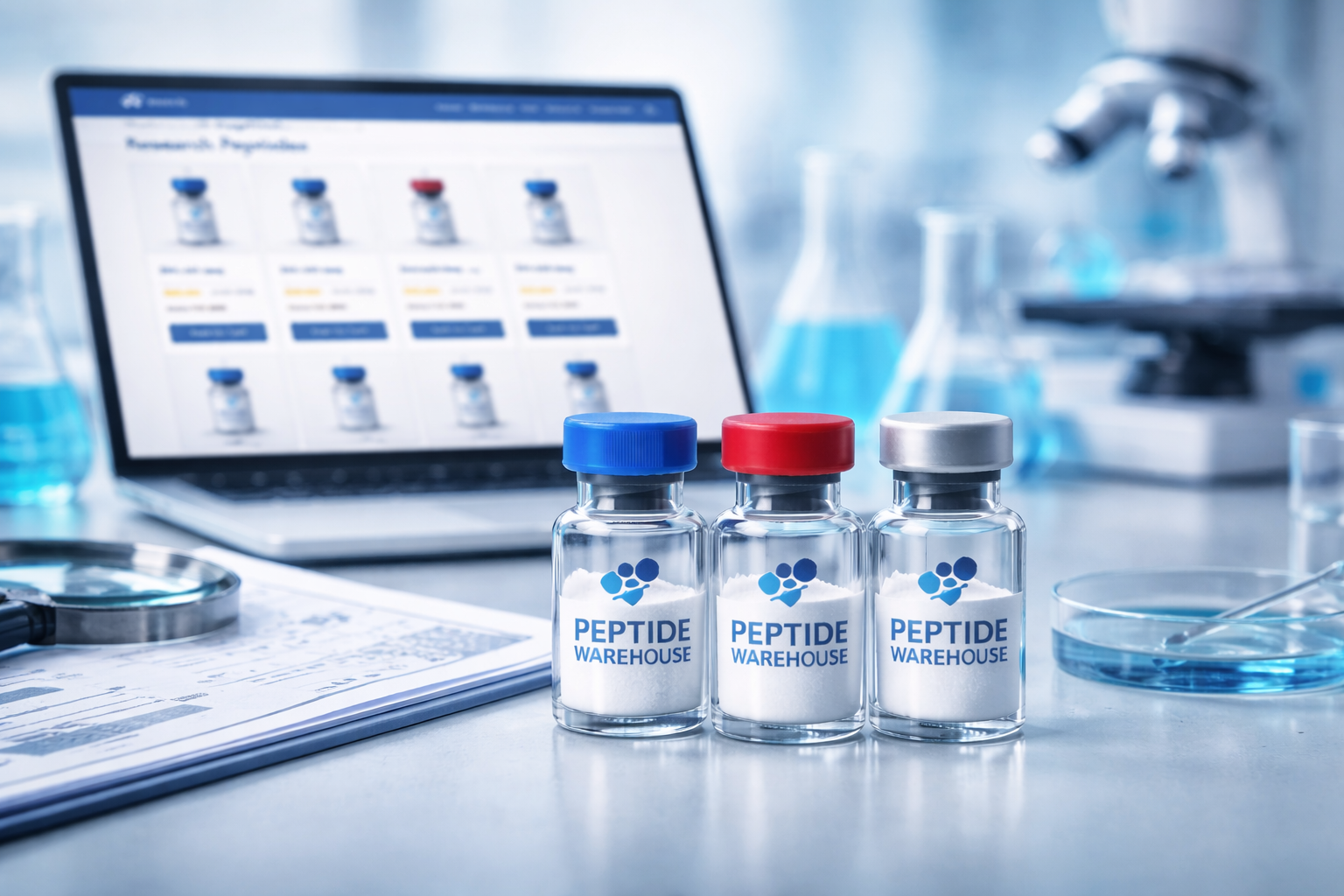
A peptide certification of evaluation is an analytical report produced by Hop over to this website a lab after a substance has actually undertaken testing. The file summarizes the outcomes of lab analysis performed on a certain set of a peptide research compound. HPLC can give valuable purity-related details, however it does not always completely verify peptide identity by itself. That is why purchasers typically search for added sustaining methods, such as LC-MS, when reviewing peptide documents.In lab study settings, analytical paperwork helps verify the identification and quality of experimental products. A Certification of Evaluation is a lab record that gives analytical information regarding a details set of a substance. These results assist researchers identify whether a substance meets specified peptide top quality requirements before it is utilized in controlled experimental setups. A peptide certification of Peptide Vials evaluation (COA) is a lab file that reports logical screening results for a certain batch of a peptide research substance.
This comes to be specifically crucial when contrasting repeat orders or assessing uniformity across several lots. At Arizona Peptides, openness and uncompromised top quality are at the core of whatever we do. Our Certificate of Analysis (CoA) gives comprehensive paperwork of the strenuous screening and quality assurance measures put on each peptide product. Our company believe in encouraging our research companions with full confidence in the pureness, effectiveness, and identification of the materials they receive.Matrix-Assisted Laser Desorption/Ionization Time-of-Flight (MALDI-TOF) and Electrospray Ionization (ESI) stand for the two primary mass spectrometry techniques employed for peptide evaluation. Both methods ionize the peptide particles and gauge their mass-to-charge proportion, producing a spectrum that functions as a molecular fingerprint. Some COAs consist of the real chromatogram image, which gives aesthetic verification of purity insurance claims.
